TEN IDEAS FOR GREEN CAREERS WEEK

Green Careers Week 2026 begins on Monday 2nd November. This year, the organisers are focusing on young people and challenging the notion that green jobs are limited to recycling or wildlife conservation…


Green Careers Week 2026 begins on Monday 2nd November. This year, the organisers are focusing on young people and challenging the notion that green jobs are limited to recycling or wildlife conservation. A wide range of jobs support green objectives in areas such as energy, transport, and construction.
Many people, especially younger generations, actively seek jobs with employers committed to making a difference to the environment. Many organisations are committed to carbon reduction and support initiatives that help protect the environment.
If you want a career that makes a difference to our planet, here are a few ideas to get you started.
1. Explore the Green Careers Week website
The official Green Careers website offers free resources, career information, educational materials, and a virtual careers fair.
This online resource is an easy first step to discovering careers you might never have considered. The website features leading examples of organisations that support green careers, such as the UK Space Agency, Amazing Apprenticeships, and the NHS.
2. Discover how to train for clean energy careers
Today, so many jobs have a green element. Find relevant training by looking for courses that teach skills in renewable energy, energy efficiency, and low-carbon operations.
You’ll find a Green Skills Centre at Riverside College in Widnes, whilst The City of Liverpool College runs courses to prepare local people to work in the clean energy sector.
Find out more about working in the green energy sector in our region by exploring the LCR Be More Green Energy career guide.
3. Volunteer for a local environmental project
If you are still figuring out your career goals, volunteering can help you uncover new opportunities and passions. Environmental projects looking for volunteers work in conservation, tree planting, habitat restoration, and wildlife monitoring.
Organisations you can get involved with include The Mersey Forest and their partners, The Canal and River Trust (tip: search Merseyside), and Mersey Biobank.
4. Discover construction as a green career
Improving the energy efficiency of existing buildings and homes is crucial to reducing emissions. Retrofitting green options boosts energy efficiency. This is a big growth area.
You can gain the required skills locally through training providers such as Zeal Community and NetRet. The right training can lead to a career in retrofit installation, advice, or assessment. Familiarise yourself with UK retrofit industry standards.
5. Attend a careers event or speak to somebody in the industry
Use the Green Careers Week website to join a virtual session, or find a careers adviser to ask about local employment and training opportunities.
Explore careers with employers such as Vestas Offshore Wind, which operates in Liverpool Bay; Alstom,which has a focus on decarbonising transport; and Knauf Insulation, based in St Helens. Research and contact their HR or careers team to learn about any local opportunities for young people.
6. Turn your love of nature into a career
Wildlife conservation, horticulture, and environmental surveying all involve working in and with nature.
The National Careers Service offers guidance on green jobs and careers, including roles such as ecologist and countryside ranger. The Wildlife Trust operates locally; at the time of writing, they are recruiting for an entry-level officer on a ten-month red squirrel project at Seaforth Nature Reserve.
7. Discover your existing green strengths
Think about your existing strengths and experience. Can they transfer into a green role?
Maths and problem solving could lead you into renewable energy research. Your passion for biology could point you to a career in conservation. A good eye for design could lead you to develop sustainable products or environmentally friendly landscapes.
8. Run a sustainability challenge
How about starting a small project with friends, neighbours or fellow students?
You could investigate food waste at school or college and present your findings. Work with friends to design a biodiversity space, such as a bug house. Or design a poster encouraging people to reduce energy use.
Working on projects like these while still in school or college is great experience to mention to future employers.
9. Create your own green careers action plan
Turn your aspirations into action. Choose a green career that appeals to you and investigate it thoroughly. Then identify the new skills you need and who you can contact for advice.
If you’re old enough to have a LinkedIn account, use this to connect with people already working in your chosen industry. Your school-arranged work placement might be coming up. Try to arrange it yourself with a local green employer or one with an environmental focus.
10. Explore apprenticeships
Explore which apprenticeships are associated with a green career. Some obvious choices include low carbon heating technician or countryside worker, but don’t narrow your search too much. Look for opportunities with employers that operate in renewable energy, energy efficiency or environmental improvement. They may not be offering a strictly “green” apprenticeship but might be looking to take someone on in customer care or administration. Getting a foot in the door with an organisation like this might lead to internal opportunities to train towards a green career.
A greener future
Green skills are increasingly relevant to almost any job, so most of us will soon work for organisations where carbon reduction and environmental strategies are standard.
The Liverpool City Region aims to become a zero-carbon city by 2035. To achieve this, our region needs a high level of green-savvy skills. Find out more by exploring the region’s Five-Year Climate Action Plan.
Green Energy Careers Guide
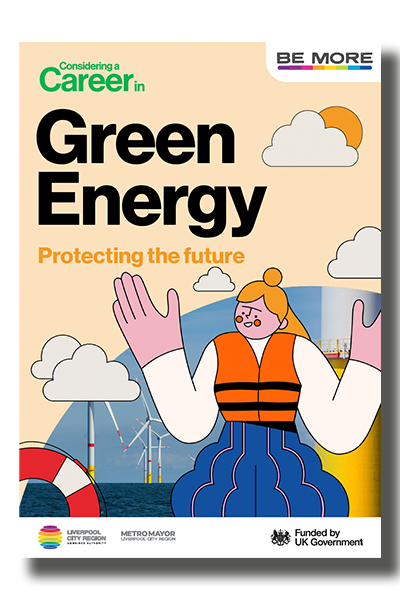
The green sector offers careers focusing on reversing climate change, protecting the natural environment, and reducing emissions of harmful greenhouse gases such as carbon dioxide.
With the global climate crisis becoming more urgent every year, most industries will need the help of green experts to reduce their impact on the planet and make their practices more sustainable.