BECOMING A MIDWIFE
A new Graduate Guarantee, which aims to unlock thousands of NHS roles and streamline the recruitment process for NHS trusts has launched…


The UK Government has launched a new Graduate Guarantee, which aims to unlock thousands of NHS roles and streamline the recruitment process for NHS trusts.
The aim is to ensure that every newly qualified midwife and nurse transitions seamlessly into employment immediately after training. As part of the Government’s Plan for Change, this staffing strategy has been designed to help create an NHS that is fit for the future and enhance patient care. This is excellent news for anyone considering a career as a midwife.
There are few roles as fulfilling as one that supports women and families through pregnancy, childbirth, and the early days of parenting. A career as a midwife gives you a central role doing just this! This article explains the role of a midwife, the qualifications required and the various career specialisms within the profession. We’ve also included some pointers on how registered adult nurses or maternity support workers can transition into midwifery.
The role of midwives
Midwives – and male midwives, as some prefer to be called – play a vital role in the lives of pregnant women. They coach and assist pregnant women through pregnancy, childbirth and help them and their families transition into parenthood.
Their mission is to safeguard the physical and emotional wellbeing of mothers. They do this through education and support. They also monitor the health and development of the baby – or babies! The midwife empowers women to make informed choices as they transition from pregnancy to childbirth and the early days of parenting.
Core duties of a midwife
Antenatal care: Monitoring the health of mums and babies throughout pregnancy, using technology like scans to check on the health of the baby, and providing guidance on nutrition and lifestyle choices.
Labour & delivery support: Being present at births, assisting and monitoring women and babies through their labour, and ensuring a safe delivery.
Postnatal care: Midwives support mothers with tips for feeding their baby, help them recover from childbirth, and signpost them if they need extra medical or emotional support.
Working so closely with mums, babies, dads, and wider families gives midwives a central and often significant role in the families they serve.
Becoming a midwife
If you possess strong communication skills, are empathetic, and can remain calm in high-pressure situations, midwifery may be the career for you. So how do you become qualified?
All midwives in the UK have to be registered with the Nursing and Midwifery Council (NMC). To do this, you must complete a qualification in midwifery. There are several recognised routes for this:
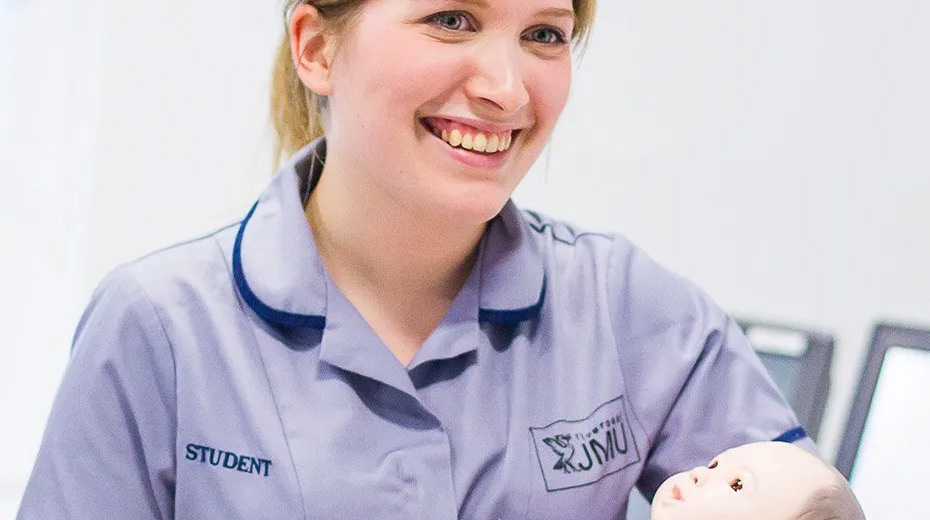
The traditional university route – The Bachelor’s Degree in Midwifery is the most common. This three-year programme blends academic learning with hands-on time in clinics. Your education will include studying anatomy, antenatal care, and gaining a comprehensive understanding of relevant medical and surgical concepts. You will have the chance to gain practical experience in hospitals and community settings. Liverpool John Moores University offers this course. Different universities will have their own entry criteria, but typical requirements include good GCSEs and at least one science at A-level.
Apprenticeship pathway: You can become a midwife by enrolling on a degree apprenticeship. You will be employed in a hospital or community setting, where you will receive on-the-job training and also study with a university. This route has the benefit of not racking up any study debts as apprenticeships are funded by employers and the Government.
Postgraduate Training for Registered Nurses: You can opt for an 18-month postgraduate midwifery programme, which builds on your existing nursing expertise. You’ll find a list of UK providers on the Postgraduate Search portal.
Career specialisms
You are likely to begin your career in general pregnancy care. There are also specialised roles that focus on a wide variety of maternal health. A career in midwifery could see you in a specialism like the ones below:
Mental health specialist midwife: Helping mothers who are facing prenatal or postnatal depression, suffering from anxiety or other mental health challenges.
Diabetes midwife: Approximately one in every 20 pregnancies will have the added complication of diabetes. You will put your specialist knowledge to use to help mothers who have pre-existing diabetes or those who acquire it during pregnancy.
High-risk pregnancy midwife: You will have a close working relationship with doctors providing care to mothers who have complex medical histories. For some mothers, complications arise during pregnancy, meaning they are referred to you or the team you are working with.
Specialist roles may require further training or certification. However, the career options allow you the opportunity to have a meaningful impact in an area of care you are passionate about.
Where will you work?
There are many different workplace settings for midwives. In hospitals, these include labour wards, antenatal clinics and specific departments. Many more midwives work in the community, visiting families at home or running a local clinic.
Outside of the NHS, private practice offers employment providing personalised care. If you choose an education or management pathway, you will be involved in training new midwives or leading a team of midwives.
Midwifery is about so much more than delivering babies. You can pursue a career that matches your aspirations, whether that’s clinical work, research or being a vital part of your community.
A growing demand for midwives
The Liverpool City Region has a diverse and growing population. Midwives will be in high demand as healthcare services continue to evolve. An increased focus on personalised and community-based care opens up more opportunities.
A career in midwifery is also a commitment to supporting women and families through a significant life event. The job is demanding – both mentally and physically – but your employment is likely to be stable.
Remember, midwifery is held in high esteem and offers one of the most rewarding careers available.