MEET THE SCOUSE SCIENTIST: MAKING SCIENCE FEEL POSSIBLE
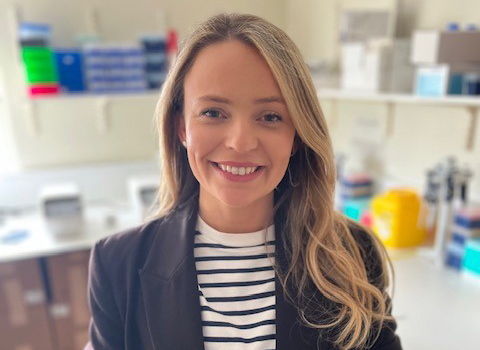
Could you have a career as a scientist? Could you be someone who goes to study at Oxford or Cambridge? Liverpool-born Holly Ellis, known as The Scouse Scientist, wants more people to feel confident exploring these very possibilities…


Could you have a career as a scientist? Could you be someone who goes to study at Oxford or Cambridge? Liverpool-born Holly Ellis, known as The Scouse Scientist, wants more people to feel confident exploring these very possibilities.
Educated at Holly Lodge and The Liverpool Blue Coat, Holly studied Biological Sciences at Oxford, then earned master’s degrees in Medical Genetics and Clinical Sciences (Genomics) at Chester and Manchester universities before completing the NHS Scientist Training Programme. She now works in NHS genetics, using science to help patients and their families.
It’s about inspiring the next generation by providing a relatable role model. I always say, “If you can see it, you can be it.”
Alongside her career, Holly shares science through videos, podcasts, school visits and appearances as an expert on BBC Morning Live. She has also worked with Aspire Liverpool to encourage educational ambition. Next, she will be presenting DNA Detectives at New Scientist Live’s Schools’ Day in London on 12 October 2026. LCR BeMore caught up with her about finding her confidence, challenging stereotypes and helping others see a future in science.
What inspired you to create The Scouse Scientist?
I wanted to educate people about healthcare science, the science that happens in the NHS, and break down stereotypes about scientists and going to universities like Oxford and Cambridge.
It’s about inspiring the next generation by providing a relatable role model. I always say, “If you can see it, you can be it.” Seeing someone you relate to doing something can make a huge difference.
Who do you hope to reach?
Young people who might not have considered science. There are lots of footballers, makeup artists and other people to follow on social media, but fewer scientists.
I share content on YouTube and social media, make a podcast and visit schools. It’s about helping people raise their aspirations. Not everyone needs to become a scientist or go to Oxford, but if that’s something you want to explore, you should feel you can.
Did you always want to be a scientist?
No! I didn’t know anyone who was a scientist. To me, that was something you saw in films. When I was choosing my GCSE options, I was set on dance, drama and music. My science teacher approached me and my mum and suggested additional science because I was doing well.
Later, I got 100% in one of my biology GCSE exams, and a teacher encouraged me to consider science as a career. Those moments made me think, “Maybe I could do this.” I’m very grateful to those teachers.
What does your NHS job involve?
I’m a clinical scientist specialising in genetics, which means looking at people’s DNA. A lot of healthcare science happens behind the scenes, so patients don’t necessarily see the people doing it. Scientists work in many different areas, including cardiac science, sleep science, and reproductive medicine.
For me, the most rewarding thing is knowing our work has a direct impact on patients and their families.
How did Oxford become an option?
I went to Holly Lodge comprehensive school, then Liverpool Blue Coat for sixth form. The Blue Coat organised a trip to Oxford, and I went with my friends without any intention of applying.
We learned about the courses, how there are different colleges at the universities, and the application process. Afterwards, my teachers encouraged me to apply because I was getting the grades. I still thought, “It’s not for me.”
My family encouraged me to give the application a go. Then I got an interview, got a place and thought, “Oh my God, what am I going to do?!”
Were you worried about fitting in?
I was terrified. No one in my family had been to university, and I worried about having a Scouse accent. The night before I started, I cried and asked my Mum and Nan not to leave me. My mum said, “Just stay for one week. If you don’t like it, you can come home.”
She came back the following week, but by then I wanted to stay. There were people with very different backgrounds, but they didn’t treat me differently. Everyone wanted to make friends. I had an amazing three years.
What stereotypes still need challenging?
It isn’t only about women in science. It’s also about women with strong regional accents, working-class backgrounds and those who are the first in their family to go to university. When films and television keep showing the same image of a scientist, some young girls can’t see themselves in that role. We need different, relatable role models.
What matters besides good grades?
Curiosity and wanting to keep learning. Science is always changing, and genetics has changed hugely since I first became interested in it.
Organisation, time management and teamwork matter too. We discuss results with doctors, genetic counsellors, midwives and other colleagues. Our work doesn’t happen in isolation.
What would you say to someone who lacks confidence?
Push yourself outside your comfort zone. If you try science and decide it isn’t for you, you can change your mind. Don’t worry so much about what other people think. When I applied to Oxford, I worried people would think, “Who does she think she is?” I had similar worries when I started The Scouse Scientist: what if I embarrassed myself?
But you have to give yourself a chance to do what you want.
What’s next for The Scouse Scientist?
I want to continue the podcast, featuring people who have been told they don’t look like scientists and exploring the different things they do.
My first appearance on BBC Morning Live was absolutely terrifying, but television was something I’d wanted to get into for a long time. I’d love to do more explaining healthcare science and genetics to wider audiences.
Find out more
Explore The Scouse Scientist on YouTube and Instagram
More information about Holly’s forthcoming talk is available at the New Scientist Live Schools’ Day page.