WHEN GCSEs DON’T QUITE GO TO PLAN
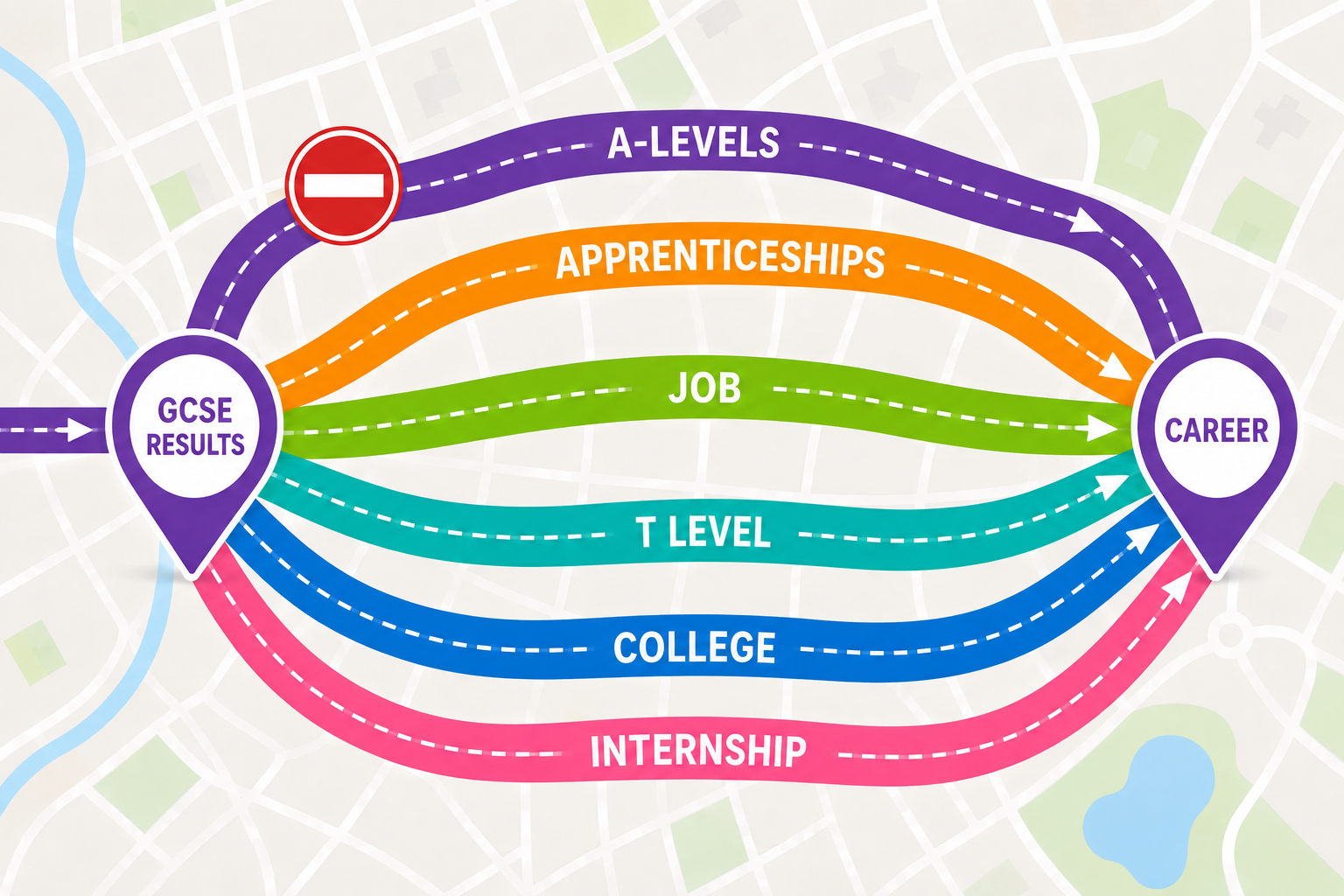
What happens when your plan was to stay on at your school and study A-levels, but you don’t get the GCSE grades you need…


What happens when your plan was to stay on at your school and study A-levels, but you don’t get the GCSE grades you need? It can feel as though the future and the career you had planned have suddenly disappeared out of sight.
They haven’t. You may need to reconsider how you reach your destination, but A-levels at your current school are only one of the different options available at 16.
First, speak to your school before considering alternatives. If you have just missed a grade, staff may still be able to offer you a place, suggest different subjects or allow you to study while resitting a GCSE. You can also contact other schools and colleges, as their entry requirements and available places may differ.
And if A-levels really are no longer a viable option, this could be an opportunity to discover a route that suits you better.
Beyond A-levels
A-levels are a well-known route to university and higher education, but they are not the only way to gain advanced qualifications or build a successful career.
The LCR BeMore guide to options for school leavers explains some of your choices, including studying A-levels elsewhere, taking a T Level, choosing a vocational course or starting an apprenticeship.
T Levels are technical qualifications equivalent to three A-levels. They combine classroom learning with an industry placement, making them worth considering if you already have a good idea of the type of work that interests you.
Colleges also offer vocational qualifications in areas including engineering, construction, business, health and social care, digital, sport and the creative industries. Search the LCR Online Prospectus to explore courses available across the Liverpool City Region.
Get earning with an apprenticeship
If you like the idea of starting to earn a wage, an apprenticeship gives you paid employment while you develop the skills needed for a recognised occupation.
And don’t assume apprenticeships are only available in traditional trades. They cover everything from healthcare and digital to finance, engineering, logistics, law, marketing, hospitality and the public sector. Entry requirements vary. Some employers request particular GCSE grades, while others are more interested in your attitude, potential and enthusiasm for the job.
This year, lots of new opportunities will emerge for young people as the Government focuses on helping them into work. Our recent article on new help for young people entering work looks at changes designed to create more opportunities for 16 to 24-year-olds, including new apprenticeships.
You can search current opportunities through the LCR BeMore apprenticeship vacancy portal.
Not quite ready for an apprenticeship?
There’s another new option worth knowing about. Foundation apprenticeships have been introduced for young people who would benefit from some extra support and experience before progressing into a full apprenticeship or further education.
They combine paid work with training and are designed to help you develop occupational skills alongside those all-important workplace skills such as communication and teamwork. That makes them particularly interesting if you’ve finished school knowing that you want to work but don’t yet feel ready to jump straight into a full apprenticeship.
If you have SEND, a supported internship is a strong option to consider. There are supported internship opportunities available starting in September for young people aged 16 to 24, and you don’t need an Education, Health and Care Plan (EHCP) to apply. They combine real workplace experience with tailored support and are designed to help young people progress towards paid employment.
What if Maths or English was the problem?
Not getting the Maths or English GCSE grades you needed doesn’t mean your options have disappeared. And you don’t necessarily have to resit these GCSEs. Read LCR BeMore’s myth-busting guide to maths and English in apprenticeships.
Young apprentices who haven’t achieved the required level in Maths and English will normally continue developing these skills as part of their apprenticeship programme. The difference is that learning can be related to practical workplace activities, from taking measurements to producing professional emails.
For someone who struggled with these subjects in a school setting, approaching them differently can make a real difference.
Still not sure what you want to do?
You don’t have to have everything mapped out at 16. If your confidence has taken a knock, or you’re simply unsure what comes next, programmes are designed to help.
The King’s Trust Team programme is a 12-week personal development programme for 16 to 25-year-olds. It includes work experience, a community project and support with CVs and interview skills, as well as the opportunity to gain a qualification. Sometimes, spending time trying things out and discovering what you are good at is more useful than rushing into a course simply because a place is available.
Take time before deciding
Don’t feel pressured into accepting the first option you find. Talk to your family, teachers and careers advisers and ask providers questions.
What will you actually study? How is the course assessed? Where have previous learners progressed to? If it’s an apprenticeship, what will you do at work and what training will you receive? And remember that changing the route doesn’t necessarily mean changing the destination. You can start at Level 2 or 3 and progress to higher-level study and apprenticeships later.
Before making your final choice, take a look at the LCR BeMore Career Guides. They explore some of the Liverpool City Region’s major employment sectors and the jobs, skills and routes into them. Results Day might not have delivered the grades you hoped for. But it could actually be the day you start looking at possibilities you hadn’t considered before.